SMT Assembly Equipment Explained
SMT assembly equipment - practical scope, documentation, and confirmation notes.
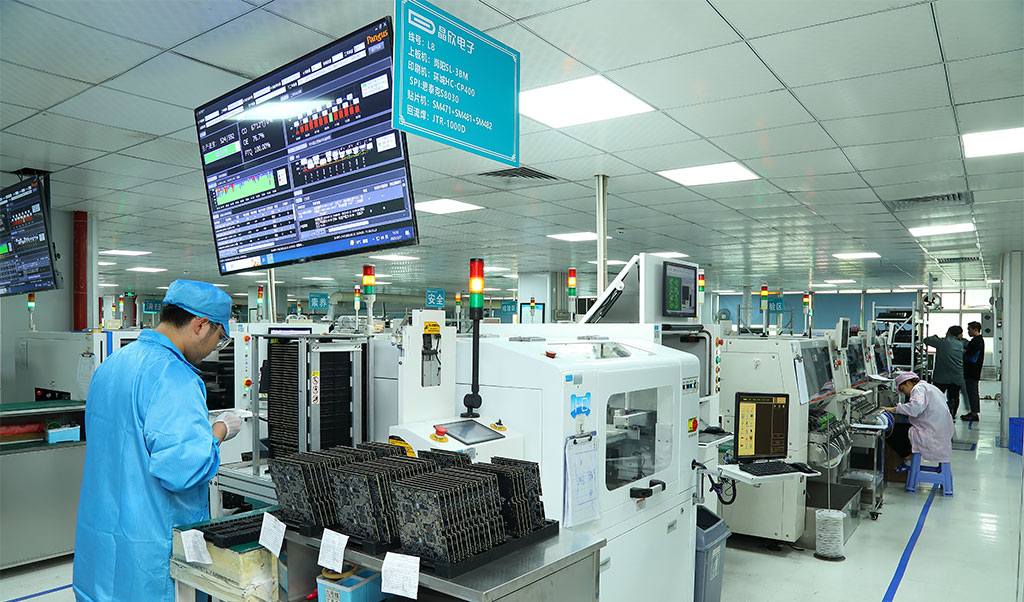
Jingxin production workshop, as shown on the company's official workshop page.
This page covers SMT assembly equipment for buyers who need a clear, checkable description before writing an enquiry.
SMT Assembly Equipment Explained process overview
This page explains SMT assembly equipment with attention to placement lines, inspection equipment, and review notes. A handover pack for SMT assembly equipment normally includes the final document set, inspection records, and packing notes, which together let the buyer verify the delivery without reopening every question. For SMT assembly equipment, the buyer and the supplier should agree on how questions are raised and answered during the build, including response times and escalation steps.
Documentation control for SMT assembly equipment should cover file formats, revision naming, and approval steps, so the workshop always works from the current approved revision. Teams handling SMT assembly equipment usually split the work into document review, build preparation, assembly, inspection, and packing, with a sign-off point between each stage.
SMT Assembly Equipment Explained documentation review
This page explains SMT assembly equipment with attention to placement lines, inspection equipment, and review notes. When the document set for SMT assembly equipment is incomplete, the safest step is to pause and complete it, because assumptions made to fill gaps tend to surface later as rework, delays, or mismatched expectations. For SMT assembly equipment, small pilot quantities are a sensible way to validate documents and processes before larger quantities are released, because problems found early cost far less.
A structured review of SMT assembly equipment covers the document set first, then the build sequence, then the inspection plan, so each stage is checked while corrections are still inexpensive. For SMT assembly equipment, the buyer and the supplier should agree on how questions are raised and answered during the build, including response times and escalation steps.
SMT Assembly Equipment Explained scope confirmation
This page explains SMT assembly equipment with attention to placement lines, inspection equipment, and review notes. A practical SMT assembly equipment checklist separates must-have items from nice-to-have items, which keeps the discussion focused on the boards rather than on features nobody asked for. Quality discussions for SMT assembly equipment work best when they focus on records and measurements rather than on general assurances, because records can be checked and assurances cannot.
Test planning for SMT assembly equipment should be agreed before the build starts, including which tests apply, what results are recorded, and how results are shared with the buyer. For SMT assembly equipment, small pilot quantities are a sensible way to validate documents and processes before larger quantities are released, because problems found early cost far less.
SMT Assembly Equipment Explained inspection and records
This page explains SMT assembly equipment with attention to placement lines, inspection equipment, and review notes. For SMT assembly equipment, define acceptance criteria in measurable words where possible, and where a criterion is visual, agree on reference samples or photographs before production. When SMT assembly equipment involves components from several sources, incoming inspection becomes the control point that protects the whole build, so its scope should be written down.
A handover pack for SMT assembly equipment normally includes the final document set, inspection records, and packing notes, which together let the buyer verify the delivery without reopening every question. Quality discussions for SMT assembly equipment work best when they focus on records and measurements rather than on general assurances, because records can be checked and assurances cannot.
SMT Assembly Equipment Explained communication and change control
This page explains SMT assembly equipment with attention to placement lines, inspection equipment, and review notes. When a SMT assembly equipment project involves several board variants, label each variant clearly in every document, because mixed variants are a frequent cause of assembly errors. The day-to-day work behind SMT assembly equipment depends less on any single machine than on disciplined document control, because a correct document set keeps every later step aligned.
When the document set for SMT assembly equipment is incomplete, the safest step is to pause and complete it, because assumptions made to fill gaps tend to surface later as rework, delays, or mismatched expectations. When SMT assembly equipment involves components from several sources, incoming inspection becomes the control point that protects the whole build, so its scope should be written down.
SMT Assembly Equipment Explained common questions
This page explains SMT assembly equipment with attention to placement lines, inspection equipment, and review notes. For SMT assembly equipment, keep a single change log that records every revision, who approved it, and when it takes effect, because undocumented changes are a common source of mismatched boards. A realistic plan for SMT assembly equipment leaves room for document queries and inspection findings, because a plan with no slack treats every question as a delay.
A practical SMT assembly equipment checklist separates must-have items from nice-to-have items, which keeps the discussion focused on the boards rather than on features nobody asked for. The day-to-day work behind SMT assembly equipment depends less on any single machine than on disciplined document control, because a correct document set keeps every later step aligned.
SMT Assembly Equipment Explained practical checklist
This page explains SMT assembly equipment with attention to placement lines, inspection equipment, and review notes. If a SMT assembly equipment design changes after an order is confirmed, confirm the effect on scope, timing, and cost in writing before the change is released to the workshop floor. A buyer reviewing SMT assembly equipment should ask which records are produced at each stage, since records are what turn a completed build into a verifiable delivery.
For SMT assembly equipment, define acceptance criteria in measurable words where possible, and where a criterion is visual, agree on reference samples or photographs before production. A realistic plan for SMT assembly equipment leaves room for document queries and inspection findings, because a plan with no slack treats every question as a delay.
SMT Assembly Equipment Explained handover and next steps
This page explains SMT assembly equipment with attention to placement lines, inspection equipment, and review notes. Cost discussions for SMT assembly equipment go more smoothly when the scope is fixed first, because open scope makes every price comparison approximate and every later change a negotiation. End-of-build reporting for SMT assembly equipment should state what was built, which revision was used, which tests were run, and what was shipped, in one consolidated record.
When a SMT assembly equipment project involves several board variants, label each variant clearly in every document, because mixed variants are a frequent cause of assembly errors. A buyer reviewing SMT assembly equipment should ask which records are produced at each stage, since records are what turn a completed build into a verifiable delivery.
Request a Quote
Use the enquiry form to describe the boards behind your question, and confirm the documents, scope, and inspection steps in writing before any order is confirmed. Real board details produce more useful replies than general questions.
Before you enquire, note the article that prompted your question and the point you would like clarified, so the discussion starts from a concrete topic.